Skip to content
Interactive walkthrough

Measure Phishing Resilience With Targeted Campaign Data

See how targeted phishing campaigns measure resilience and connect results to training follow-up.

4 steps · ~1 minGuided walkthrough

What you'll see

See the exact workflow, the proof that stays attached, and the control points that keep reviews from turning back into document chasing.

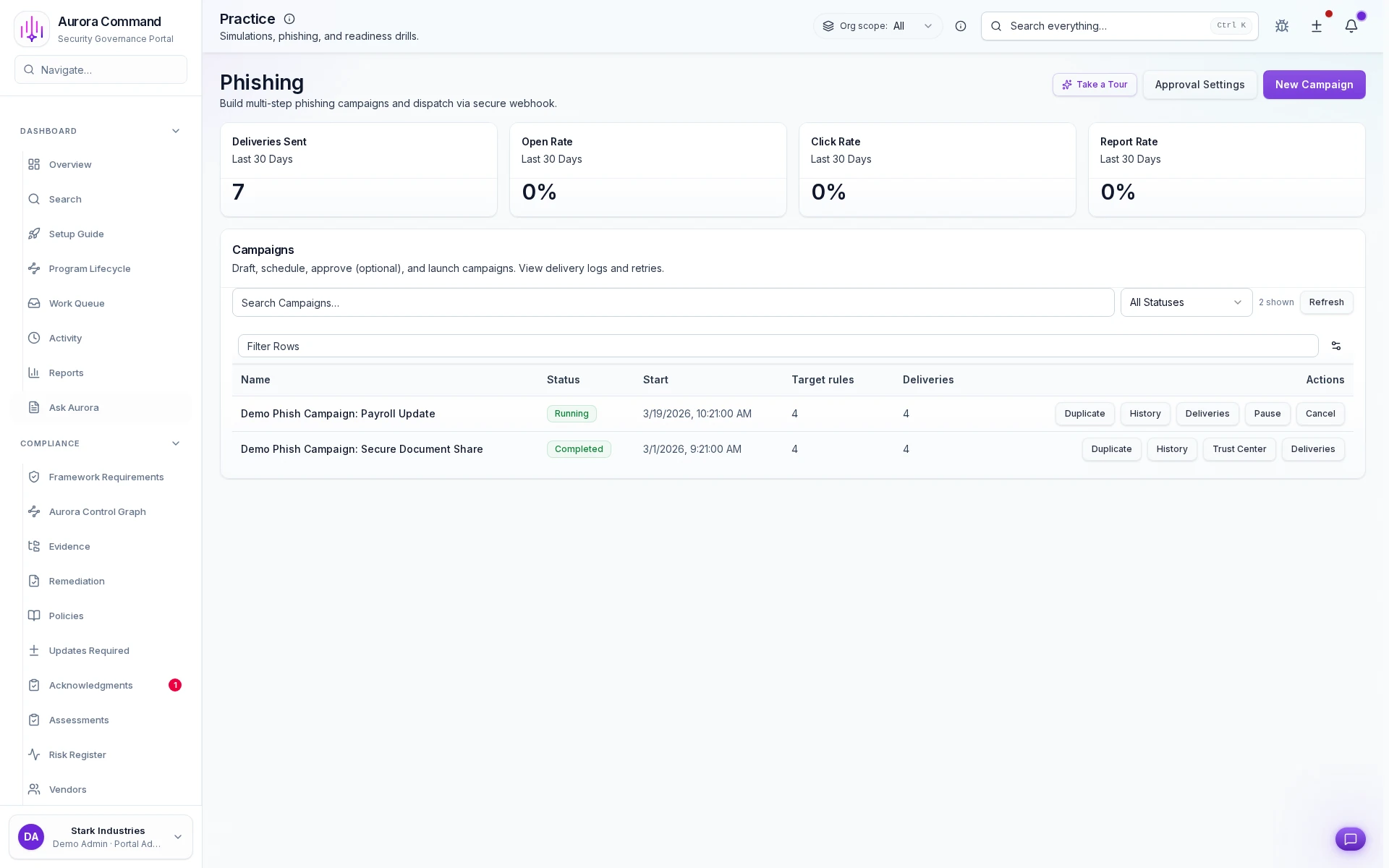
Aurora Command phishing campaigns with metrics and target groups

Every campaign, one workspace

1 of 4
1/4

What you can verify in this walkthrough

You are seeing the live workflow, the attached proof trail, and the control points that matter once reviewers ask follow-up questions.

Targeted campaign design

Campaigns target specific cohorts with difficulty tiers so results measure actual resilience instead of random exposure.

Outcome metrics are immediate

Click rates, report rates, and credential submission data appear as campaigns run, not weeks later.

Trend reporting shows program impact

Multi-campaign trend lines reveal whether training and awareness investments are reducing susceptibility over time.

Why this workflow matters

One-off phishing tests prove nothing. When campaign targeting, outcome metrics, and trend reporting run continuously, resilience becomes a measurable program.

Tell us about one phishing campaign plan

In the live walkthrough, we show targeting, campaign execution, and trend metrics over time.

Cohort targetingCampaign executionTrend metrics

Turn Simulations Into Defensible Trend Evidence

Campaign targeting, cohort outcomes, and trend evidence that connect to training follow-up.

Where This Fits

See how this walkthrough connects to broader workflows

Readiness Program
  1. Deliver compliance training content
  2. Test resilience with simulated attacks
  3. Track readiness across teams